
Top 12 Best Honda Generator for RV That Will Blow Your Mind
Anyone who has relied on a best honda generator for rv knows the frustration of a model that either sputters out too soon or weighs down the whole trip. An underpowered generator can leave your RV without electricity at the worst moments, while a bulky or noisy one makes camping uncomfortable. The best models have a quiet operation and enough wattage to handle essential appliances like the fridge and air conditioning without tossing on extra weight or complexity.
The right generator for RV use needs consistent power output around 2000 to 3000 watts to comfortably cover most needs. A compact, fuel-efficient design matters as well since space and fuel storage are always limited on the road. Durability in construction helps the unit last through bumpy drives and various weather conditions.
Often the best choices include easy starting mechanisms and quieter mufflers to avoid both hassle and noise, crucial in campgrounds with close neighbors.
Need a Quick Check?
| Image | Product | Price |
|---|---|---|
Our Top Picks 1 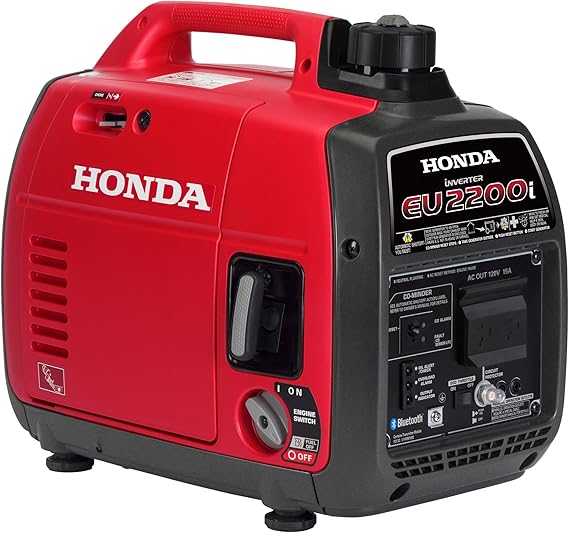 | Honda EU2200i | Check Price |
Our Top Picks 2  | Honda EU2200i Companion | Check Price |
Our Top Picks 3  | Honda EU3000iS | Check Price |
Our Selected Top 12 Honda Generator for Rv Worth Buying
This list features compact and reliable generators designed specifically for recreational vehicles, focusing on performance, suitability, and practical use. Each review outlines key strengths and weaknesses, helping readers understand which models best fit their power needs and lifestyle while camping or traveling.
1. Honda EU2200i Inverter Generator
The Honda EU2200i Inverter Generator is especially popular because it runs quietly, perfect for RV users who need power without noise disruptions. It suits anyone needing up to 2200 watts of reliable electricity for small appliances during travel or camping trips.
Setting up involves filling its 1-gallon gasoline tank and flicking the magneto ignition to start the 4-stroke engine. It runs at 48 to 57 dB(A), meaning it won’t disturb your campsite or neighbors.
Two power outlets offer convenient access, suitable for microwaves, refrigerators, or small air conditioners. It can keep going for up to 8 hours, offering steady, clean 120-volt power perfect for sensitive equipment.
Performance matches its specs well, powering common RV appliances without fuss. Built with durable materials, the generator feels solid and portable enough for frequent use. The strongest praise notes its quietness during operation while the main complaint points to the limited 1-gallon fuel tank, which restricts runtime after 8 hours and requires frequent refills.
Quiet operation receives the highest praise, with noise levels low enough to not bother neighbors. The most mentioned drawback is the limited fuel tank capacity, which might require stops for refueling on longer trips. These traits define the everyday experience with this generator.
Those who prioritize a low-noise generator for typical RV appliances will be satisfied. Anyone needing longer runtime or more outlets might prefer a model with larger fuel capacity or additional connection options.
Pros
- Quiet operation under normal conversation levels
- Portable size and manageable weight
- Suitable for sensitive electronics like computers
- Long 8-hour runtime on a full tank
Cons
- Small 1-gallon tank limits extended use
- Only two power outlets available
| Specification | Details |
|---|---|
| Wattage | 2200 watts |
| Fuel Type | Gasoline |
| Tank Volume | 1 gallons |
| Engine Type | 4 Stroke |
| Runtime | 8 hours |
| Voltage | 120 volts |
2. Honda EU2200i Companion Inverter Generator
Honda’s EU2200i Companion inverter generator works great for RV users looking for dependable, quiet power. Its built-in 30A outlet simplifies RV hookups and supports essential appliances without fuss. For those valuing noise control while camping or on the road, this generator’s quiet operation stands out as its biggest strength.
Setting up the EU2200i is straightforward, thanks to its portability and compact size. Daily use involves managing a fuel tank just under a gallon, which supports a runtime of about three hours at full load.
Two power outlets keep things flexible for running small AC units, microwaves, or charging electronics. Its advanced inverter tech ensures stable output for sensitive devices like laptops.
Performance meets expectations for a 2200-watt generator, handling common RV power needs without hiccups. The GXR120 engine is well-built and reliable, though some users note the fuel capacity limits longer use without refills. Operating noise is impressively low, often quieter than a normal conversation, which makes it better than many competitors for close-quarters camping.
The standout feature in reviews is how quietly the generator runs, making it suitable for close camping and RV use without disturbing neighbors. A common limitation mentioned is the relatively short runtime, requiring refueling during longer use periods. Its noise level and power stability receive strong praise, but fuel capacity keeps it from longer hauls without breaks.
Those needing quiet, reliable power for moderate use in their RVs will appreciate this generator. People requiring longer runtimes or multiple outlets might want to consider models with larger fuel tanks or more connection options for extended trips or larger setups.
Pros
- Quiet operation between 48 and 57 dB(A)
- Easy RV hookup with built-in 30A outlet
- Stable inverter power for sensitive electronics
- Compact and portable design
Cons
- Short runtime of 3 hours at full load
- Only 2 power outlets available
| Specification | Details |
|---|---|
| Wattage | 2200 watts |
| Fuel Type | Gas |
| Tank Volume | 0.95 gallons |
| Runtime | 3 hours |
| Engine Type | Honda GXR120 |
3. Honda EU3000iS Inverter Generator
Running an RV smoothly without worrying about power outages calls for something strong and reliable. The Honda EU3000iS Inverter Generator works great for people with RVs who need reliable power for appliances like AC units and fridges. Its biggest strength is quietly delivering up to 3000 watts while running on gasoline, making it a solid companion on the road.
Starting the generator is easy thanks to an electric ignition system, so you won’t struggle with pull cords after a long drive. It has a 3.4-gallon tank, offering around 19 hours of runtime on a single fill, which means less frequent refueling during a trip.
The quiet operation at 50 to 57 dB(A) ensures you can camp or relax without noise complaints from neighbors or other RVers.
Performing consistently at 2800 running watts, it supports most 13,500 BTU RV AC units and keeps electronics running safely due to advanced inverter technology. The build is solid with a 4-stroke, 418cc engine under the hood.
Reviews say it handles daily RV energy demands well but note that at heavier loads it can run a bit louder than expected.
The quietness of the generator makes it welcome in RV parks where noise can be an issue, while the main complaint involves an increase in volume when the generator works close to its maximum output. The electric start is a definite convenience for regular use.
People wanting a reliable, mostly quiet power source for their RV will find this generator a great match. Those who need absolute silence under all conditions or alternative fuel options might want to consider other models.
Pros
- Quiet operation suitable for camping and RV parks
- Long runtime with a large fuel tank
- Electric start simplifies powering up
- Supports sensitive electronics safely
Cons
- Louder under heavy loads than expected
- Runs on gasoline which may require careful storage
| Specification | Details |
|---|---|
| Output Wattage | 3000 watts |
| Engine Displacement | 418 cubic centimeters |
| Tank Volume | 3.4 gallons |
| Runtime | 19 hours |
| Operating Noise Level | 50 to 57 dB(A) |
| Ignition System Type | Electric |
4. Honda EU7000iS Inverter Generator

Delivering a steady 7000 watts of power, the Honda EU7000iS Inverter Generator is a solid choice for anyone with an RV who needs reliable electricity. It’s particularly suited for those who value quiet operation alongside strong output, allowing you to run multiple devices without disturbing the peace.
Setting it up requires little more than filling its 5.1-gallon gas tank and flicking the electronic ignition for a smooth start. Daily use benefits from its wheels, making movement easier despite its size.
The generator runs quietly at 52 to 58 dB(A), so it won’t interrupt conversations or your outdoor relaxation while providing steady 240 volts of power.
Performance ranks high with a 4-stroke, 11.7 hp engine that sustains 7000 running watts long enough for typical RV stops or backup needs, delivering clean power safe for sensitive electronics. The build feels solid and reliable, designed to last with serious fuel capacity.
The quietness is praised widely, but some mention the overall size and weight can make storage and transport a bit of a chore.
Users appreciate just how quiet the generator is during operation compared to other gas-powered units. On the downside, its bulkiness and weight can complicate transportation and require ample storage space.
Anyone needing steady, quiet power for extended periods on the road will be satisfied. Those wanting a lightweight, compact option for brief use or smaller devices might look for a smaller generator.
Pros
- Runs quietly between 52 and 58 dB(A)
- Strong 7000 running watts for multiple devices
- Electronic ignition makes starting simple
- Wheels improve portability despite size
Cons
- Heavier and larger than some portable options
- Limited to about 6.5 hours runtime per tank
| Specification | Details |
|---|---|
| Output Wattage | 7000 watts |
| Fuel Tank Volume | 5.1 gallons |
| Noise Level | 52 to 58 dB(A) |
| Engine Power Maximum | 11.7 hp |
| Runtime | 6 hours and 30 minutes |
| Voltage | 240 volts_of_alternating_current |
5. Honda EU2200i Inverter Generator

The Honda EU2200i Inverter Generator is perfect for campers and RV users who need steady power while traveling, providing up to 2200 watts consistently. It’s especially suited for those who want a quiet, portable generator with enough power to run appliances or tools during outdoor trips and off-grid adventures.
Setting it up involves just adding gasoline and pulling the recoil start. Its compact size and lightweight construction make it easy to carry around, fitting well beside the RV or inside a camping setup.
Two power outlets provide flexibility for different devices. A fresh tank provides up to 8 hours of steady operation, which covers a full day or night without refueling.
Consistently producing 2200 watts, the generator handles common RV power needs without hiccups. It’s built tough enough for outdoor use yet light enough to move single-handedly. The strongest praise highlights its quiet operation and fuel efficiency.
The common complaint is the recoil start, which requires a firm pull to get going.
Quiet operation and long 8-hour runtime are the most appreciated features. The recoil start is the most common source of frustration, needing a firm pull to get the engine running.
Those looking for dependable power for camping or RV travel will find this generator fits well. Buyers who need electric start or more power outlets might want to explore other options.
Pros
- Portable and easy to carry for outdoor use
- Runs quietly compared to other generators
- Provides steady 2200 watts power output
- Long runtime up to 8 hours per tank
Cons
- Recoil start can be tough and requires strength
- Only two power outlets available
| Specification | Details |
|---|---|
| Wattage | 2200 watts |
| Fuel Type | Gasoline |
| Runtime | 8 hours |
| Total Power Outlets | 2 |
| Engine Displacement | 121 cubic centimeters |
| Voltage | 120 |
6. Honda EU3200i Inverter Generator

Quiet operation stands out with this Honda EU3200i Inverter Generator, perfect for powering RV essentials while keeping noise low. It suits anyone needing reliable power for appliances like furnaces, fridges, or 13,500 BTU AC units during camping or road trips, with a focus on clean electricity that won’t damage sensitive electronics.
Setup is simple, just fill the 1.2-gallon gas tank and start it up without fuss. The LED display keeps track of power usage and runtime, so you’re always informed. Running at 54 to 58 dB(A), it’s quieter than a regular conversation, making it ideal for peaceful campsites.
Its inverter technology means the power stays stable, protecting any computer or sensitive device connected.
It delivers consistent 3200 watts of power, enough to keep most RV appliances running smoothly for about 8 hours on a full tank. The build feels solid and compact, designed for portability and ease of use.
Praise comes for how quiet and reliable the generator is. Some mention the small tank size means refueling more often on longer trips.
The generator’s quiet operation and reliable power output receive high praise, especially for running electronics safely and keeping noise levels minimal. The most common concern relates to the small 1.2-gallon tank, which limits continuous use time and requires refueling more often on extended outings.
Those prioritizing low noise and stable power will appreciate this model. People planning long stays without refuel options might prefer a generator with a larger tank. Anyone needing consistent power for sensitive RV appliances will find this unit suits their needs well.
Pros
- Runs quietly below normal conversation noise
- Stable power for sensitive electronics
- Compact and easy to transport
- Up to 8 hours runtime on one tank
Cons
- Relatively small fuel tank capacity
- May require frequent refueling on longer trips
| Specification | Details |
|---|---|
| Output Wattage | 3200 watts |
| Tank Volume | 1.2 gallons |
| Fuel Type | Gas |
| Runtime | 8 hours |
| Noise Level | 54 to 58 dB(A) |
7. WEN DF680iX Dual Fuel Inverter Generator

WEN DF680iX Dual Fuel Inverter Generator delivers reliable power with the flexibility of running on both gasoline and propane. Perfect for RV users who need a strong, versatile generator capable of handling heavier loads safely.
Its dual-fuel capability is its standout feature.
Setting up this generator is straightforward with an electric start that gets it going quickly, avoiding manual pull-start struggles. Switching between gasoline and propane is smooth, which allows you to optimize fuel use depending on availability. The built-in WEN Watchdog CO Shutdown Sensor enhances safety by monitoring carbon monoxide levels during long camping trips.
Performance-wise, it provides a solid 6800 surge watts on gas and 6000 on propane, making it capable of powering multiple devices in an RV without trouble. Construction feels sturdy and the engine runs relatively quietly for its size. Users appreciate the CO sensor the most, but some mention the 6-hour runtime could be longer for extended trips.
The CO shutdown sensor is highly valued for safety, especially in enclosed RV environments. Many users mention the 6-hour runtime can require planning for refueling or fuel switching during longer outings.
This generator suits RV travelers wanting dependable power with flexible fuel options and safety features. Those needing longer run times or a lighter unit might consider alternatives better matched for extended remote use.
Pros
- Runs on both gasoline and propane
- Electric start for easy ignition
- CO shutdown sensor improves safety
- Eight power outlets available
Cons
- Limited 6-hour runtime per fuel tank
- Relatively heavy to move around
| Specification | Details |
|---|---|
| Wattage | 6800 watts |
| Fuel Type | Gasoline, Liquefied Petroleum Gas |
| Tank Volume | 2.9 gallons |
| Engine Displacement | 224 cubic centimeters |
| Running Wattage (Propane) | 4500 watts |
| Runtime | 6 hours |
8. Honda EU3200i Inverter Generator
Quiet and steady power makes it a solid choice for anyone looking to run an RV without fuss. It suits those needing reliable electricity for sensitive electronics and appliances.
Its biggest strength lies in providing clean, stable power that keeps gadgets running safe and sound during trips or off-grid stays.
Setting up the generator is straightforward, especially with the electric start feature that gets it going quickly. The front panel’s LED indicators are handy to keep an eye on fuel levels and Eco Throttle operation, helping extend run time. Keeping it fueled and monitored is simple, and the Oil Alert prevents damage by shutting down the engine when oil runs low, adding safety and convenience.
Power delivery is steady with 3200 starting watts and 2600 running watts, handling most RV needs comfortably. Build quality feels solid, with a 4-stroke engine that runs smoothly. The CO-MINDER system adds an important safety layer by shutting down if carbon monoxide rises.
A common drawback mentioned is the 3-hour runtime on a full tank, which may require more frequent refueling on longer trips.
Many appreciate the quiet, stable power and safety features like Oil Alert and CO-MINDER, which ease worries about engine damage and carbon monoxide risks. Frequent refueling is a common downside due to the 3-hour runtime, which can interrupt longer trips or heavier use.
Those who need reliable, clean power for sensitive devices and value safety will find this generator a good match. People planning extended time off-grid with higher power demands might want to consider models with longer runtimes or larger fuel capacity.
Pros
- Clean, stable inverter power for sensitive electronics
- Oil Alert feature protects engine from damage
- Easy electric start for quick operation
- The CO-MINDER system improves user safety
Cons
- Short 3-hour runtime on a full tank
- Only three power outlets available
| Specification | Details |
|---|---|
| Wattage | 3200 watts |
| Tank Volume | 5 gallons |
| Engine Type | 4 Stroke |
| Output Wattage | 3200 |
| Running Wattage | 2600 watts |
| Runtime | 3 hours |
9. Honda EU1000i Inverter Generator

A compact and quiet inverter generator, ideal for RV travelers needing reliable, clean power for sensitive electronics. Its biggest strength is running quietly while delivering enough juice for fans, lights, and small tools without bulk.
Setup is straightforward thanks to its light weight and manageable size, making it easy to move around your campsite or RV space. Daily use is comfortable because it runs as quietly as a soft conversation, so it doesn’t disturb neighbors or your own downtime. Operating it feels safe and efficient, with smooth power handling for all your small electronics and appliances.
Performance is steady, supplying reliable power with inverter technology that keeps voltage stable for computers and sensitive devices. Built solidly by Honda, it feels durable and well-made but the most frequent drawback is its limited power output, which restricts running larger appliances. On the plus side, it’s impressively quiet, a standout feature for its class.
Quiet operation is the most praised feature, making it great around other campers. However, the power limits often come up as an issue for people who expect it to run larger appliances or tools.
People needing power for fans, lights, and small electronics will appreciate how well it works. Those looking for a generator to run bigger equipment should explore other options with higher output.
Pros
- Runs quieter than normal conversation
- Light enough for easy transport
- Clean power output suitable for computers
- Compact size fits small storage spaces
Cons
- Power output is limited to small devices
- Can’t handle heavy-duty power tools
| Specification | Details |
|---|---|
| Product Dimensions | 18 x 10 x 15 inches |
| Item Weight | 32.3 pounds |
| Noise Level | 42 to 50 dB(A) |
| Model Number | EU1000i |
10. Honda EG4000 Portable Generator

Constructed with a durable gas-powered 4-stroke engine, the Honda EG4000 Portable Generator suits campers and residential users who need reliable power. Its standout feature is a solid 3500 running watts capacity, making it strong enough to handle multiple devices without failing.
Setting up involves filling the 6.3-gallon tank and using the magneto ignition system to start the engine. It runs quietly for up to 14 hours, so it won’t disturb the campsite or your home environment. Carrying it around is manageable because it’s designed to be portable and includes five outlets for powering different devices at once.
The generator runs steadily at its rated 3500 running watts, with a 3300-watt starting capacity for sudden power surges. The build quality feels sturdy and practical, with an engine displacement of 418 cc providing smooth operation.
The most positive feedback highlights its long runtime and consistent power. A common downside is the weight, which can make moving it less convenient than smaller models.
Strong praise points to its long runtime and reliable power delivery, which makes it suitable for extended use during camping or power outages. The most common issue is its weight, which can make frequent moving or transport challenging for some.
Ideal for those needing steady, long-lasting power at a fixed spot like an RV campsite or home backup. Users wanting something lighter or higher wattage might want to look elsewhere.
Pros
- Long runtime of 14 hours per tank
- Five power outlets for multiple devices
- Reliable 4-stroke engine design
- Gas-powered with easy magneto ignition
Cons
- Relatively heavy for a portable generator
- Limited to 3500 watts running capacity
| Specification | Details |
|---|---|
| Running Wattage | 3500 watts |
| Starting Wattage | 3300 watts |
| Tank Volume | 6.3 gallons |
| Engine Type | 4 Stroke |
| Total Power Outlets | 5 |
| Runtime | 14 hours |
11. Honda EU2200i Inverter Generator
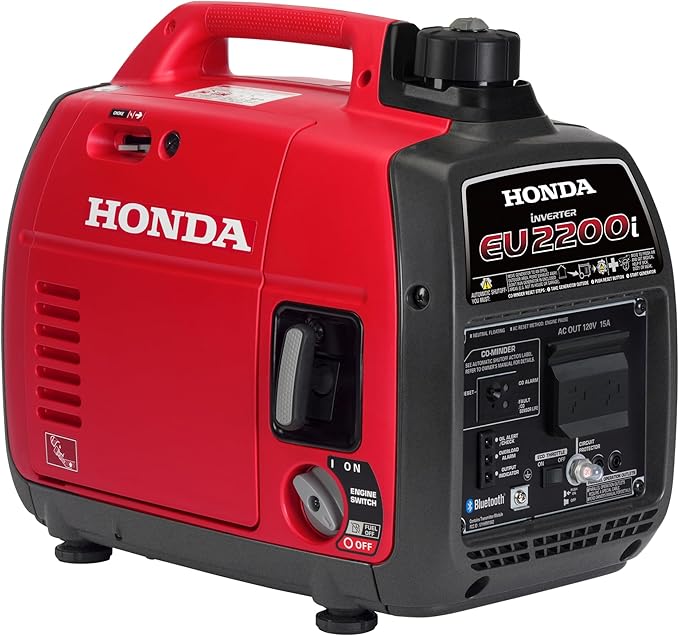
Quiet operation stands out immediately with this generator, making it great for RV trips where noise matters. Its 2200-watt power output suits running small appliances like microwaves and fridges, perfect for camping or home backup.
Reliability and low noise level are the biggest selling points.
Setting up takes just a few minutes, thanks to its portable size and easy-to-use controls. Running on gasoline with a 4-stroke engine, it delivers steady power without much fuss. Two power outlets let you plug in multiple devices, and the runtime of 8 hours keeps it going for a full day of use without refueling.
Power delivery stays consistent at up to 2200 watts, handling small AC units and electronics well. The build feels solid and compact, designed for transport and outdoor use.
Quietness is the most praised feature, while some mention the need to watch fuel carefully during longer use since 8 hours can go by fast.
Quiet operation is the biggest strength, making this generator suitable for noise-sensitive environments like campsites or neighborhoods. The main drawback comes from its runtime; 8 hours can be limiting if you need power throughout longer trips without refueling.
Great for RV users who value silence and portability while powering small to medium appliances. Those needing longer continuous power or more outlets might want to explore larger capacity models or multiple units.
Pros
- Operates quietly at 48 to 57 dB(A)
- Portable and easy to carry
- Reliable 4 Stroke engine
- Supports sensitive electronics safely
Cons
- Runtime may require frequent refueling
- Limited number of power outlets
| Specification | Details |
|---|---|
| Wattage | 2200 watts |
| Fuel Type | Gasoline |
| Runtime | 8 hours |
| Output Wattage | 2200 watts |
| Engine Displacement | 208 cubic centimeters |
| Total Power Outlets | 2 |
12. Honda EG4000 Generator

Powerful and quiet, the Honda EG4000 delivers 4000 watts of steady power, making it an ideal backup energy source for RV users who value reliability without the noise. It stands out for its stable voltage, essential for protecting sensitive RV electronics during trips or emergencies.
Getting this generator up and running is straightforward with its electronic ignition system and portable design. Its 5-gallon fuel tank supports extended operation of up to 14 hours, letting you focus on your trip instead of constant refueling.
Three power outlets offer flexibility when connecting multiple devices and appliances inside your RV.
Durable construction and a 4-stroke, 270 cc engine provide a steady 4000 watts output, capable of handling large appliances and tools. Noise levels stay moderate at around 66-67 dB(A), making it quieter than many comparable generators. Most users appreciate its quiet operation, though a common critique is the relatively heavy fuel capacity adding some bulk when transporting.
The quiet operation around 66-67 dB(A) and stable voltage control are standout features praised for keeping RV electronics safe and undisturbed. A frequent drawback is the bulky feel due to the 5-gallon fuel tank, which can be cumbersome during transport.
Those valuing steady power and quieter use during RV trips will find it ideal. Travelers needing extremely lightweight gear or more power outlets might want to consider other options.
Pros
- Quiet operation at moderate decibel level
- Stable voltage within +/- 1% for device safety
- Long 14-hour runtime on full tank
- Electronic ignition for easy starts
Cons
- Larger fuel tank makes it somewhat bulky
- Only three power outlets available
| Specification | Details |
|---|---|
| Output Wattage | 4000 watts |
| Runtime | 14 hours |
| Fuel Tank Volume | 5 gallons |
| Engine Displacement | 270 cc |
| Sound Level | 66-67 dB(A) |
Best Honda Generators for RV Side by Side Comparison
| Product | Wattage | Tank Volume | Portability | Recommended Uses |
|---|---|---|---|---|
| Honda EU2200i | 2200 watts | 1 gallons | Portable | Monitoring |
| Honda EU2200i Companion | 2200 watts | 0.95 gallons | Portable | Monitoring |
| Honda EU3000iS | 3000 watts | 3.4 gallons | Electric | – |
| Honda EU7000iS | 7000 watts | – | Super Quiet, Wheels | Residential, Outdoor |
| Honda EU2200i Model | 2200 watts | 121 cc (engine) | Portable | Camping, RV, Job Site |
| Honda EU3200i | 3200 watts | 1.2 gallons | – | Camping, Residential |
| WEN DF680iX Dual Fuel | 6800 watts | – | Electric Start | Camping |
| Honda EU3200i Plus | 3200 watts | 5 gallons | Electric Start | Residential |
| Honda EU1000i | – | – | 32.3 pounds | – |
| Honda EG4000 | 3500 watts | 6.3 gallons | Portable | Camping, Residential |
| Honda EU2200i Series | 2200 watts | 208 cc (engine) | Portable | – |
| Honda EG4000 Standard | 4000 watts | 5 gallons | Portable | Commercial |
- Wattage2200 watts
- Tank Volume1 gallons
- PortabilityPortable
- Recommended UsesMonitoring
- Wattage2200 watts
- Tank Volume0.95 gallons
- PortabilityPortable
- Recommended UsesMonitoring
- Wattage3000 watts
- Tank Volume3.4 gallons
- PortabilityElectric
- Recommended Uses–
- Wattage7000 watts
- Tank Volume–
- PortabilitySuper Quiet, Wheels
- Recommended UsesResidential, Outdoor
- Wattage2200 watts
- Tank Volume121 cc (engine)
- PortabilityPortable
- Recommended UsesCamping, RV, Job Site
- Wattage3200 watts
- Tank Volume1.2 gallons
- Portability–
- Recommended UsesCamping, Residential
- Wattage6800 watts
- Tank Volume–
- PortabilityElectric Start
- Recommended UsesCamping
- Wattage3200 watts
- Tank Volume5 gallons
- PortabilityElectric Start
- Recommended UsesResidential
- Wattage–
- Tank Volume–
- Portability32.3 pounds
- Recommended Uses–
- Wattage3500 watts
- Tank Volume6.3 gallons
- PortabilityPortable
- Recommended UsesCamping, Residential
- Wattage2200 watts
- Tank Volume208 cc (engine)
- PortabilityPortable
- Recommended Uses–
- Wattage4000 watts
- Tank Volume5 gallons
- PortabilityPortable
- Recommended UsesCommercial
How to Choose the Right Honda Generator for Your RV
Key factors for selecting the best generator for your RV include power output, fuel efficiency, noise level, and portability. Choosing the right balance ensures reliable performance, reduces fuel costs, and avoids carrying unnecessary weight or disturbance, making your travels smoother and more economical.
Power Output and Capacity
Starting a generator only to find it cannot power essential RV appliances at once is a frustrating experience. The difference between a smooth setup and constant shutdowns often lies in understanding starting and running wattage. Appliances like air conditioners and microwaves need a surge of power when they start, sometimes double their normal running wattage.
A generator with insufficient surge capacity will trip circuit breakers or fail to keep up, especially when multiple devices are on.
A good unit supplies enough surge watts beyond its continuous running wattage to cover spikes, commonly 20-30% higher. For practical use, adding the running wattage of all intended appliances plus their surge requirements is necessary. Generators rated around 3000-4000 running watts with a surge capacity of 3500-4500 watts usually handle typical RV setups, including AC, fridge, and small electronics running together.
Portability and Size
Hauling a heavy, bulky generator around tight RV spaces can turn a simple task into a struggle. Portability depends on the unit’s weight and dimensions, which dictate ease of loading, unloading, and storage.
Around 40-70 pounds strikes a balance between power and manageability, but anything beyond 80 pounds needs wheels or strong handles to move without strain.
Good designs position handles ergonomically, often including built-in wheels to easily move over gravel or uneven ground. Compact models fit neatly into storage compartments without sacrificing fuel capacity or output.
Measuring your RV’s available storage before buying prevents awkward fits or leaving the generator outside where it’s exposed to weather.
Noise Levels
A noisy generator quickly becomes a nuisance during quiet camping or overnight rest. Noise levels measured in decibels (dB) indicate how disruptive the unit will be. Quiet generators operate around 50-60 dB, roughly the volume of a normal conversation from a short distance.
Louder models exceeding 70 dB can disturb neighbors and conflict with campground rules.
Look for generators equipped with mufflers or sound insulation to reduce operational noise. Some models use inverter technology that makes them run more quietly under light loads.
Keeping noise below 60 dB generally ensures a more pleasant environment and compliance with noise regulations.
Fuel Efficiency and Runtime
Fueling the generator frequently interrupts your trip and adds to the overall cost. Runtimes vary widely depending on fuel consumption rates and tank size.
Efficient generators consume less fuel per hour, often between 0.2 and 0.5 gallons depending on load, allowing longer use between fill-ups.
Fuel tanks sized 1 to 2 gallons provide a good balance of runtime and portability. Features like Eco-Throttle adjust engine speed to match power needs, which can nearly double runtime by reducing fuel use during light loads.
Planning for at least 6-8 hours of continuous operation on a single tank helps avoid early refueling during extended camping days.
Safety Features and Compatibility
Safety is crucial when running generators near living spaces. Overload protection and automatic shutoff prevent damage to the unit and connected appliances if the load exceeds limits. Confirming compatibility with your RV’s electrical system and transfer switch avoids wiring mistakes or electrical faults.
Carbon monoxide is a serious hazard with gasoline generators. Units with built-in CO detectors or the ability to connect external alarms improve safety by alerting occupants to dangerous gas buildup.
Proper ventilation remains essential, but these safety features provide extra security when the generator is used near or inside the RV.
Optimizing Fuel Efficiency When Using a Honda Generator for Your RV
Honda generators are known for their fuel efficiency, which is a key factor when powering an RV. Most Honda models have an eco-throttle system that adjusts engine speed to match the load, conserving gasoline when the demand is low.
Running the generator at partial load instead of maximum capacity helps reduce fuel usage and wear on the engine. Regularly checking and replacing the air filter ensures the engine breathes properly, aiding combustion efficiency.
To optimize fuel use:
- Use the eco-throttle or economy mode during low power needs.
- Turn off unnecessary appliances to lower load.
- Refuel before the tank is empty to avoid contamination issues.
- Store the generator in a cool place to prevent fuel vaporization and degradation.
This approach keeps the generator running longer between refuels and helps maintain consistent power supply on the road.
Essential Maintenance Tips to Extend the Lifespan of Your Honda Generator
Maintaining a Honda generator properly can significantly prolong its operational life and reliability. Routine oil changes are critical; Honda typically recommends changing the oil after the first 20 hours of use, then every 50 hours or annually.
Checking the spark plug for fouling or wear helps prevent starting issues and rough operation.
Follow these maintenance steps:
- Inspect the air filter every 25 hours and clean or replace it as needed.
- Keep the generator clean from dust and debris, particularly the cooling vents.
- Run the generator periodically during storage to keep internal components lubricated.
- Store with a fuel stabilizer if not used for extended periods to avoid fuel breakdown.
Consistent maintenance avoids unexpected breakdowns, ensuring the generator stays dependable on camping trips or long drives.
Comparing Honda Generators with Other Top Brands for RV Use
Honda generators are often compared with brands like Yamaha, Briggs & Stratton, and Champion for RV use. One advantage of Honda units is their quieter operation, which matters during overnight stays at campgrounds. Their inverters deliver clean and stable power, protecting sensitive RV electronics such as computers and TVs.
Other factors to consider:
- Honda tends to have a strong reputation for durability and fuel efficiency.
- Yamaha generators can be similarly quiet but may have different power output options.
- Briggs & Stratton models often come at a lower price but can be noisier.
- Champion generators usually offer more budget-friendly choices but with varying long-term reliability.
Choosing a generator depends on balancing noise levels, runtime, weight, and price for your specific RV setup. Honda’s reliable performance makes them a solid choice for many people who use RVs.
People Also Asked
How Do I Size a Generator for My RV Needs?
Choose a generator that can handle the total wattage of everything you want to run at the same time. Add up the starting and running watts of your appliances and pick a generator with some extra capacity. This helps avoid overload and keeps your devices running smoothly.
What Safety Precautions Should I Follow When Using a Generator?
Always use your generator outdoors and away from windows to prevent carbon monoxide buildup inside the RV. Make sure the unit is on a flat, stable surface and keep it dry. Having a carbon monoxide detector inside your RV is a good safety step too.
How Long Do RV Generators Typically Last with Regular Use?
RV generators often last between 1000 and 2000 hours with regular use if properly maintained. Following the recommended oil change schedule and keeping the air filter clean extends their life. Running the generator regularly keeps it in good working condition.
Can This Generator Power Sensitive RV Electronics Safely?
Many Honda generators produce clean power that’s safe for sensitive electronics, thanks to their inverter technology. It stabilizes the voltage and frequency, reducing the risk of damage to devices like laptops or TVs. Still, connect high-value electronics through a surge protector for added safety.
What Common Problems Should I Watch for in RV Generators?
Watch for common issues like fuel system problems, dirty air filters, and worn spark plugs. Regular maintenance is key since neglect can cause hard starting or sputtering. Listening for unusual noises during operation can help catch problems early.
Conclusion
Choosing the right Honda generator for your RV mainly depends on power output, noise level, and fuel efficiency. You need enough wattage to run your essential appliances without overload. Lower noise is better for campsite comfort, and good fuel efficiency helps keep your trips longer without frequent refueling.
Think about how much space you have for storage and how often you plan to use the generator. This will help you pick a model that fits your budget and lifestyle.
Check the comparison table and product details above to find the one that aligns with your needs.

I’m Tyler Brooks, a car care and automotive writer who loves keeping vehicles clean, protected, and running smoothly. I cover detailing techniques, paint protection, interior cleaning, fluid checks, and easy DIY maintenance. I create practical guides that help everyday drivers take care of their cars inside and out without spending a fortune.